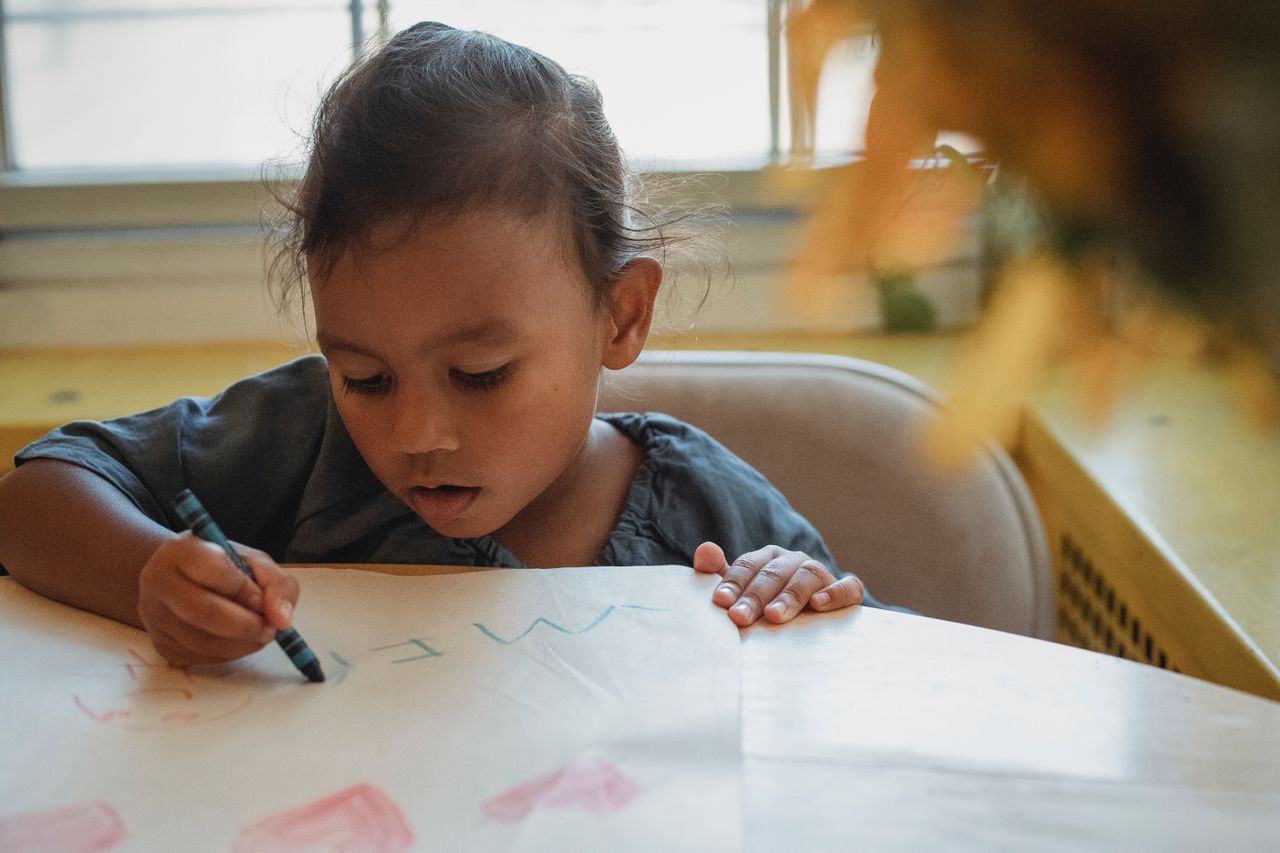
Fine motor skills are the small, precise movements of the hands and fingers that let a child hold a pencil, use scissors, button a shirt, and eventually write, and they are one of the strongest foundations for school success. Summer, with its slower pace and unstructured time, is an ideal season to strengthen them before the demands of a new school year arrive.
Parents often think of school readiness in terms of letters and numbers. But before a child can write a letter, the hands have to be ready to do the work, and that readiness is built through play, not worksheets. Our licensed pediatric Occupational Therapists, serving families across Vero Beach, Sebastian, and Fort Pierce on Florida's Treasure Coast, spend a great deal of time helping children develop exactly these foundational hand skills.
Why do fine motor skills matter so much for school?
Fine motor ability is not just about neat handwriting; it predicts broader achievement. Using three nationally representative data sets and controlling for prior achievement and background factors, a landmark study found that children's fine motor skills at kindergarten entry strongly predicted later reading and mathematics achievement (Grissmer et al., 2010, Developmental Psychology). In other words, the hand skills a child brings into kindergarten ripple forward into core academics.
That is partly because so much of early schooling runs through the hands. The American Occupational Therapy Association notes that occupational therapy practitioners support children's participation in school by addressing the underlying skills, including fine motor and visual-motor abilities, that activities like writing, cutting, and managing classroom materials require (AOTA, 2024). When the foundation is shaky, a child can spend so much effort just forming letters that there is little left over for spelling or ideas.
What fine motor skills lead to handwriting?
Handwriting sits on top of several building blocks that develop in a rough order:
• Hand and finger strength, so a child can sustain a grasp and press with control.
• An efficient pencil grasp, which matures from a whole-fist hold toward a refined three-finger grip.
• Bilateral coordination, using two hands together, such as holding paper while the other hand draws.
• Hand-eye and visual-motor integration, so the hand can produce what the eye plans.
• Crossing the midline and shoulder stability, which support controlled movement across a page.
A child who skips ahead to letter formation without these foundations often develops an awkward grasp or fatigues quickly. This is one of the things pediatric occupational therapy actually addresses, by building the underlying system rather than just drilling the end skill.
How can families build fine motor skills at home this summer?
The best fine motor practice rarely looks like practice. Everyday play does the work:
• Playdough, putty, and clay for hand strength.
• Tearing, crumpling, and gluing paper for craft projects.
• Using tongs or tweezers to move small objects, like a sorting game.
• Threading beads, lacing cards, and building with small blocks.
• Drawing on a vertical surface, an easel or paper taped to a wall, which builds wrist and shoulder stability.
• Real-life tasks: zipping, buttoning, pouring, and helping in the kitchen.
Short, frequent, low-pressure sessions beat long ones. Ten focused minutes inside a fun activity, several times a week, builds far more skill than a tense half-hour with a worksheet.
When should a parent consider occupational therapy?
Some children need more than home practice. It may be worth an evaluation if a child past preschool age still avoids coloring or drawing, tires quickly during hand activities, holds a pencil or crayon in an awkward or fisted way well beyond the typical age, struggles with scissors and self-care tasks like buttons and zippers, or becomes frustrated and avoids fine motor work altogether. For Treasure Coast families weighing support, our pediatric occupational therapy program on the Treasure Coast offers individualized evaluation and play-based intervention tailored to each child. Children who receive both occupational therapy and ABA services often see gains reinforce one another, since regulation and motivation support skill-building.
Frequently asked questions
What are fine motor skills, in simple terms? Fine motor skills are the small, coordinated movements of the hands and fingers used for tasks like writing, cutting, buttoning, and picking up small objects. They develop gradually through play and everyday activities and form the foundation for handwriting.
At what age should my child have a mature pencil grasp? Pencil grasp matures over several years, typically refining toward a three-finger grip in the preschool and early school years. An awkward or fisted grasp that persists well beyond that range, or that causes fatigue or frustration, is worth having evaluated.
Can fine motor delays affect more than handwriting? Yes. Fine motor skills support self-care, classroom participation, and even early academics, and research links them to later reading and math achievement. Strengthening them benefits far more than penmanship.
What are the best summer activities to build fine motor skills? Hands-on play works best: playdough, beading, lacing, tongs-and-tweezers games, building with small blocks, and drawing on a vertical surface. Real tasks like zipping, buttoning, and helping in the kitchen count too.
How do I know if my child needs occupational therapy rather than just practice? If a child avoids hand activities, tires quickly, keeps an immature grasp well past the typical age, or struggles with scissors and self-care despite plenty of opportunity, an evaluation can determine whether targeted support would help.
Partner with us on your child's school readiness
Summer is the perfect window to build the hand skills that make the school year smoother. Vero Pediatric Therapy Services provides individualized, play-based occupational therapy that helps Treasure Coast children develop the fine motor foundation for handwriting and confident classroom participation. Contact our team to learn how we can support your child this summer.
About the authors
Vero Pediatric Therapy Services is a private-pay, family-centered pediatric therapy practice serving families across Vero Beach, Sebastian, and Fort Pierce on Florida's Treasure Coast, including Indian River and St. Lucie Counties. Our clinical team brings together licensed Occupational Therapists and BCBA-supervised ABA professionals who deliver evidence-based, individualized care. To learn how we can help your child, contact our team.