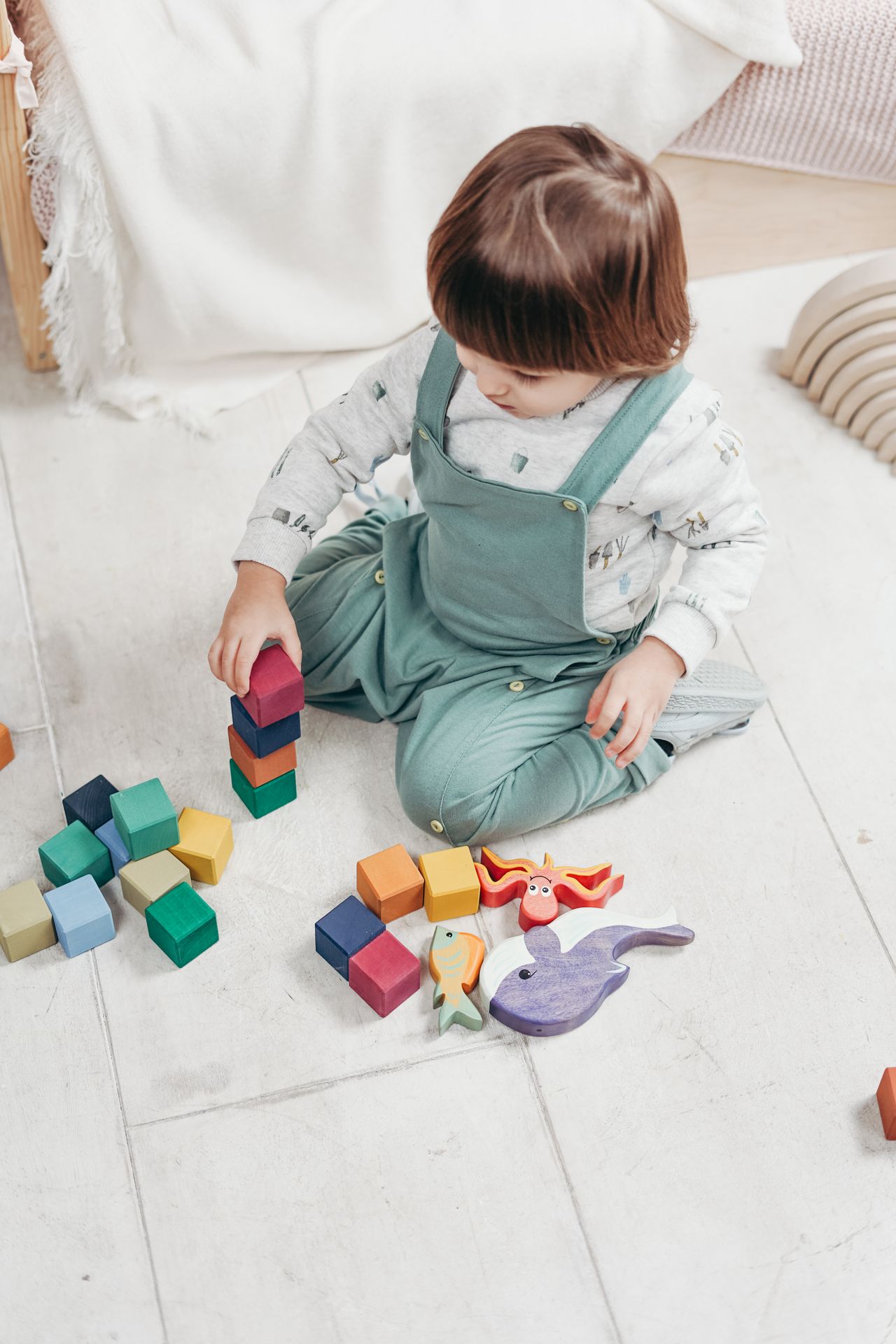
Functional communication is a child's ability to express wants, needs, and feelings in a way other people understand, whether through words, signs, pictures, or a device. In Applied Behavior Analysis (ABA), building functional communication is one of the most important goals a team can pursue, because so much of the frustration and challenging behavior families see at home comes from a child who has something to say and no reliable way to say it. When a child gains a way to communicate, behavior very often improves on its own.
There is strong evidence behind this approach. Functional Communication Training (FCT) was identified as an evidence-based practice in the 2020 review by the National Clearinghouse on Autism Evidence and Practice, which found it effective for teaching communication, reducing problem behavior, and maintaining those gains across settings and over time (NCAEP, 2020). With the Centers for Disease Control and Prevention now estimating that about 1 in 31 eight-year-old children has been identified with autism (CDC, 2025), the number of Treasure Coast families looking for effective, respectful ways to support communication continues to grow.
Why does communication affect behavior so much?
Imagine knowing exactly what you want but having no way to tell anyone. For a young child, that experience is overwhelming, and the result is often crying, tantrums, grabbing, or other behavior that adults find difficult. In ABA, we understand that behavior usually serves a purpose: to get something, to escape something, to gain attention, or to meet a sensory need. When a child cannot communicate that purpose with words, the behavior becomes the communication.
Functional communication training works by teaching the child a clear, effective way to meet that same need. A child who used to scream to escape a hard task learns to ask for a break. A child who grabbed food off the counter learns to request a snack. The behavior fades not because it was punished, but because the child now has a better tool that works faster and more reliably. Our BCBA-supervised teams treat communication as the foundation that makes the rest of a child's progress possible.
How does play-based ABA teach functional communication?
Modern ABA does not teach communication through drills at a table alone. The most effective work happens inside play and daily routines, where motivation is natural and skills transfer to real life. This is the heart of the principles of modern, play-based ABA: meeting the child where their interest already is and building communication into the moments that matter to them.
In practice, a therapist follows the child's lead during play, then arranges opportunities for the child to communicate. If a child loves bubbles, the therapist might pause and wait for the child to request "more," or hold the bubbles in view so the child has a reason to point, sign, or use a device. Each successful communication is immediately honored, which teaches the child that communicating works. Over many repetitions across many activities, the skill becomes the child's own. The same principles apply whether a child communicates with spoken words, sign language, picture exchange, or a speech-generating device, because the goal is reliable communication, not communication in one specific form.
What does functional communication look like at different stages?
Functional communication grows in stages, and a good program meets the child where they are:
1. Early requesting: the child learns to ask for highly motivating items and activities, often the fastest way to reduce frustration-driven behavior.
2. Expanding functions: the child moves beyond requesting to commenting, rejecting, asking for help, and answering simple questions.
3. Social communication: the child uses communication to connect with others, take turns, and share attention.
4. Generalization: the child uses these skills with different people, in different places, and across the day, not just in therapy.
Generalization is where the value becomes real for families, because a skill that only appears in a therapy room has not yet changed daily life.
How families and therapists work together
Children make the most progress when the people in their everyday world use the same strategies the therapy team uses. That is why parent involvement is built into quality ABA programs. When a parent learns to pause and wait for a request, to honor communication attempts consistently, and to resist anticipating every need before the child can express it, the child gets dozens more practice opportunities every day.
This partnership is also where co-treatment can help. A child who is working on communication in ABA and also receiving occupational therapy for sensory or motor needs often sees compounded gains, because the two teams reinforce each other's goals. For families ready to start, learning what our BCBA-supervised ABA program offers is a practical next step toward a coordinated plan. The aim throughout is a child who can tell the people who love them what they need.
Frequently asked questions
What is functional communication training in ABA?
Functional communication training is an evidence-based ABA strategy that teaches a child a clear, effective way to express a need, then reinforces that communication so it replaces challenging behavior. The communication can take many forms, including words, signs, pictures, or a device, depending on the child.
Will my child only learn to communicate in therapy sessions?
No. A central goal of ABA is generalization, which means the child uses communication skills with different people and in different settings, including home and the community. Parent coaching and practice in everyday routines are what make those skills stick beyond the therapy room.
Does functional communication training only use spoken words?
Not at all. The goal is reliable communication in whatever form works best for the child. Many children begin with signs, picture exchange, or a speech-generating device, and some develop spoken language alongside or after those systems. The form matters less than the child's ability to be understood.
How does teaching communication reduce challenging behavior?
Much challenging behavior is a way of communicating an unmet need. When a child learns a faster, more reliable way to express that need, the challenging behavior usually decreases because it is no longer necessary. The focus is on giving the child a better tool, not simply stopping the behavior.
Is ABA appropriate for children who are not yet talking?
Yes. ABA is often especially helpful for children who are not yet talking, because building a functional way to communicate is one of its core strengths. A BCBA-supervised team assesses each child and designs a plan around how that child currently communicates and where they can grow.
Help your child find their voice
Every child deserves a reliable way to be understood. Functional communication training, delivered through play and supported by the whole family, gives children that ability and gives families relief from the frustration that comes with not being understood. To learn how our team can support your child's communication, contact Vero Pediatric Therapy Services.
About the authors
Vero Pediatric Therapy Services is a private-pay, family-centered pediatric therapy practice serving families across Vero Beach, Sebastian, and Fort Pierce, throughout Indian River County and St. Lucie County on Florida's Treasure Coast. Our clinical team includes licensed Occupational Therapists and BCBA-supervised ABA professionals who deliver evidence-based, individualized care. To learn more, contact our team.