Parent training in ABA therapy is the structured, BCBA-supervised coaching that teaches caregivers the same naturalistic strategies their child's clinical team uses, so the work continues every meal, bath, drive, and bedtime - not only during sessions. For families on the Treasure Coast whose child receives Applied Behavior Analysis services, it is the single highest-leverage ingredient in long-term outcomes, and it is the part of the program most underused by families who are not given a clear roadmap for what their role looks like.
At Vero Pediatric Therapy Services, our clinical team builds parent training into every ABA plan because the research and our clinical experience both say the same thing: kids who have caregivers who are coached and involved make faster, more durable progress than kids whose caregivers are bystanders.
What the evidence says about parent involvement
The Cochrane systematic review on parent-mediated interventions for young children with autism found that parent-implemented programs produced measurable improvements in child language and joint engagement when caregivers were trained and supervised by qualified clinicians (Cochrane Database of Systematic Reviews, 2013). The 2020 update of the National Clearinghouse on Autism Evidence and Practice (NCAEP) identified parent-implemented intervention as one of 28 established evidence-based practices for children, adolescents, and young adults on the autism spectrum (NCAEP, 2020).
The Behavior Analyst Certification Board's BCBA Task List, 5th Edition, names caregiver training as a core competency: a BCBA is expected to design and supervise the training of caregivers in the very same procedures the clinical team uses, with measurable goals and ongoing assessment of caregiver fidelity (BACB, 2017).
The Centers for Disease Control and Prevention now estimates that 1 in 36 children in the United States is identified with an autism spectrum disorder, with rising rates of identification driving an expanding demand for high-quality ABA services and trained caregivers (CDC, 2023).
What parent training actually looks like in practice
A high-quality ABA program does not bolt parent training on as an afterthought. It is woven into the plan from the first family meeting.
A clear, individualized plan
Within the first weeks of services, the BCBA sits with caregivers to identify the goals that matter most in the family's actual daily life: requesting wants and needs, accepting a "no," tolerating transitions between activities, communicating discomfort instead of escalating, sitting at a meal, getting dressed, falling asleep at a reasonable hour. These goals are tied to specific naturalistic strategies the family will learn.
Modeling and coached practice
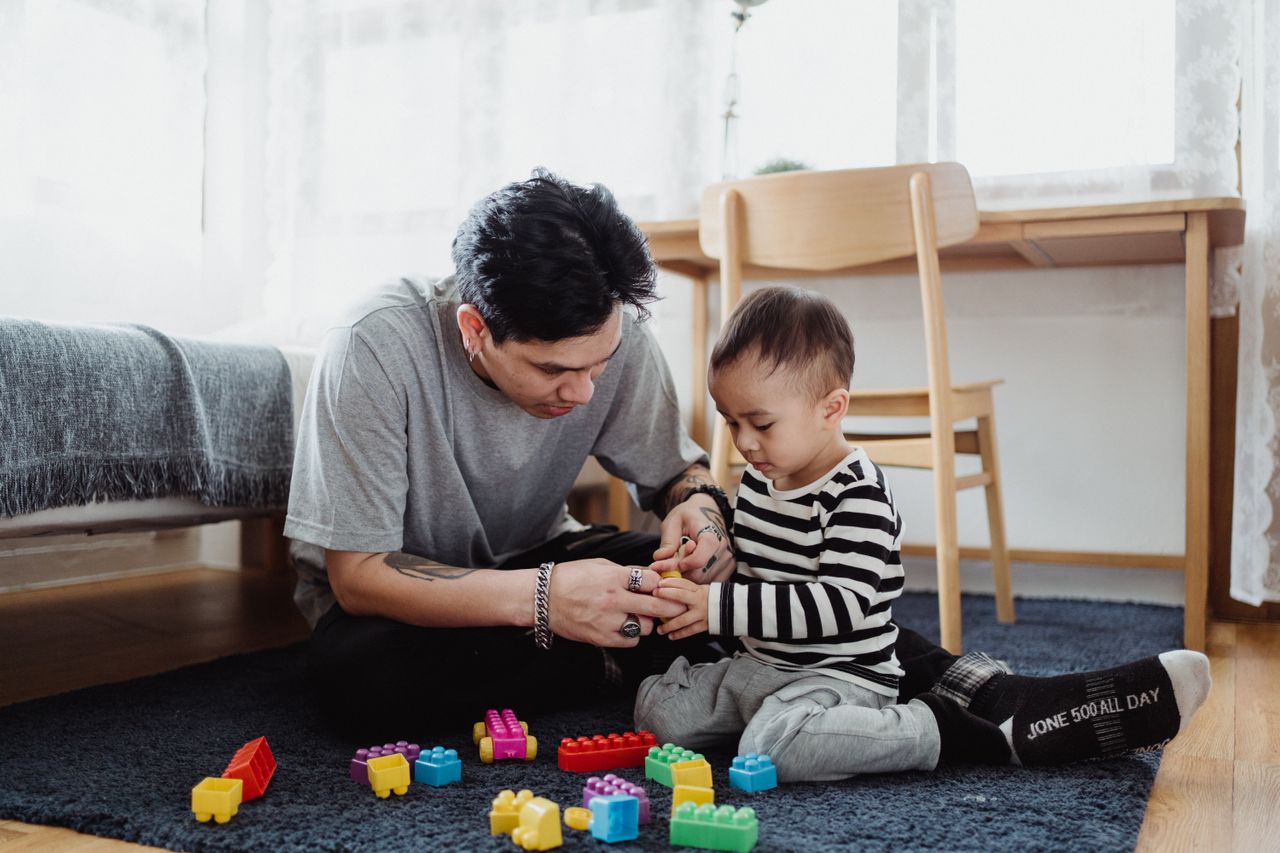
The BCBA or supervising RBT models a strategy with the child - prompting a request, pacing a transition, reinforcing a communicative attempt. The caregiver then practices the same strategy with the child while the clinician coaches in real time. We do not hand families a worksheet and walk out.
Generalization across routines
The same strategy is generalized across meals, baths, car rides, store visits, and bedtime. A request strategy is not only for a session table; it is for the kitchen, the playground, and the grocery store. This is the heart of the principles of modern, play-based ABA.
Data, in plain English
Caregivers track a small number of measurable behaviors - five-minute observations, simple counts, brief notes - so progress is visible week over week. We translate the clinical data into language families actually use, so caregivers can see what is working and what is not.
Sibling, grandparent, and school integration
The same strategies are extended, with consent, to siblings, grandparents, regular caregivers, and (when the child is in school or daycare) the educational team. The more consistent the environment, the more durable the gain.
If your family is researching ABA generally, our BCBA-supervised ABA program on the Treasure Coast incorporates parent training and family coaching as a core element from day one, not as an upsell.
Why family involvement multiplies outcomes
A child receiving 10, 15, or 25 hours of clinical ABA per week is in the family environment for the other 140-plus waking hours. The math is unforgiving. A skill that gets practiced only in session is a skill that has limited ecological validity - it stays a "session skill." A skill that gets prompted, reinforced, and generalized across the family's actual daily routines becomes a real skill the child uses in the world.
Three patterns we see consistently across Treasure Coast families:
• Communication skills generalize faster when caregivers know how to wait, prompt, and reinforce communicative attempts in the moment, instead of pre-empting them by reading the child's mind.
• Daily-living skills go from impossible to routine when caregivers run consistent, calm sequences with the same prompts every morning.
• Challenging behavior reduces more durably when caregivers can identify the function of the behavior and respond the way the clinical team would respond.
What parent training does not require
It does not require a clinical background. It does not require hours of homework on top of an already-full day. It does not require perfection. It requires a willingness to be coached, a willingness to try a strategy more than once, and the family's honest report on what is actually happening at home so the BCBA can adjust the plan.
Frequently asked questions
Is parent training required for ABA services? At Vero Pediatric Therapy Services, yes - we build it into every plan because outcomes are meaningfully better when families are coached. Some clinics treat parent training as optional or as a separate billable service; in our model it is integrated into the supervised program from the start.
How much time does parent training actually take? A typical schedule is one to two structured parent-training sessions per month with the BCBA, plus brief coached moments during regular sessions when the parent is present. Outside of that, the "work" is being the parent the child already has - using the strategies during meals, baths, drives, and play.
What if I'm a working parent and not home during sessions? We schedule structured parent-training sessions outside of working hours, deliver written and video summaries of each session, and offer evening and weekend coaching slots. Many of our Treasure Coast families are dual-working households, and the program is built around that reality.
Can grandparents and other caregivers be trained too? Yes. With parental consent, we coach grandparents, regular nannies, and other recurring caregivers. The more consistent the strategy across the people the child spends time with, the more durable the progress.
What ages does this apply to? Parent training is appropriate at every age we serve - toddlers, preschoolers, school-age children, and older. The strategies change with the child's developmental level, but the core principle (caregivers as the primary agents of generalization) does not.
Do we serve families outside of Vero Beach? Yes. We see families across Indian River County and St. Lucie County, including Sebastian, Wabasso, Vero Beach, Fellsmere, Fort Pierce, and Port St. Lucie. Many families combine clinic-based therapy with in-person coaching to keep travel manageable.
Get a clinical team that coaches your whole family
If your child is starting ABA services, or you are reviewing your current provider and want to understand what high-quality parent training looks like, the right next step is a conversation with our clinical team. Contact Vero Pediatric Therapy Services today to schedule.
About the authors
Vero Pediatric Therapy Services is a private-pay, family-centered pediatric therapy practice serving families across Vero Beach, Sebastian, Fort Pierce, and the broader Treasure Coast (Indian River and St. Lucie Counties, FL). Our team of licensed Occupational Therapists and BCBA-supervised ABA professionals delivers evidence-based, naturalistic care built around each family's daily life.