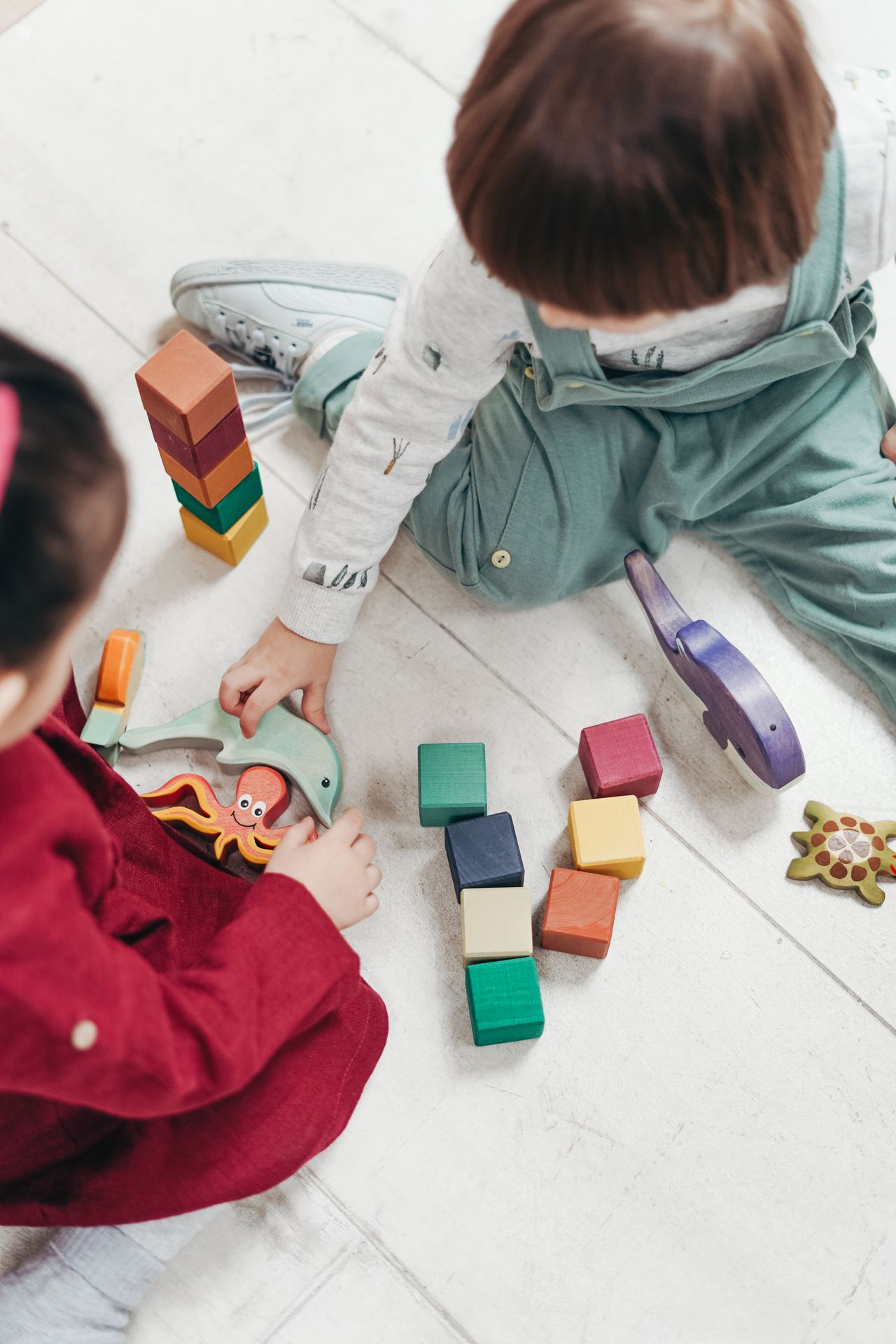
Building social skills through play-based ABA means teaching the everyday abilities that connection depends on - sharing, taking turns, reading social cues, starting and keeping a conversation, and playing alongside others - inside natural, motivating play rather than through drills at a table. For many children, especially autistic children, these skills do not develop automatically, and modern Applied Behavior Analysis breaks them into teachable steps that a child can practice in the moments that matter most.
Summer is a natural time to focus on social development. The school routine that structures peer interaction is gone, and unstructured time can either widen social gaps or, with the right support, become rich practice. This article explains how play-based ABA builds social skills and how Treasure Coast families can reinforce that growth during the summer months.
Why are social skills hard for some children?
Social skills are complex. They require a child to notice another person, interpret what that person means, predict what might happen next, and respond in a way that keeps the interaction going - often all within a few seconds. For children with autism and related developmental differences, one or more of those steps can be genuinely difficult, even when the child very much wants to connect.
Autism is more common than many families realize. The Centers for Disease Control and Prevention now estimates that 1 in 31 eight-year-old children in the United States has been identified with autism spectrum disorder (CDC, 2025). For these children and others with social communication challenges, the goal is never to make them act like someone they are not. It is to give them tools so connection feels more possible and less overwhelming.
How does play-based ABA teach social skills?
Modern ABA is naturalistic and play-based, which means skills are taught inside activities the child enjoys rather than through rote repetition. A therapist follows the child's interests, joins their play, and weaves in opportunities to practice a target skill, so a child learning to take turns might practice it during a favorite game, where the motivation is built in. This approach reflects the principles of modern, play-based ABA that today's families should expect from quality care.
The method works by breaking a large skill into achievable steps and reinforcing progress. "Playing with a friend" is not one skill; it is many - approaching, sharing materials, waiting, handling not getting your way, and recovering when something goes wrong. A BCBA-supervised team identifies which steps a specific child needs, teaches them in a supportive setting, and then helps the child use them with real peers and family. Naturalistic and social-skills interventions of this kind are among the practices identified as evidence-based for autistic children and youth (National Clearinghouse on Autism Evidence and Practice, 2020).
Families who want to understand how structured social-skill work fits into a complete program can explore our BCBA-supervised ABA program and how it is individualized for each child.
What social skills does play-based ABA commonly target?
The specific goals always depend on the individual child, but several areas come up often. Foundational skills include joint attention, sharing a focus with another person, and tolerating the back-and-forth of play. Interactive skills include turn-taking, requesting, and responding to peers. Higher-level skills include reading facial expressions and tone, starting and maintaining conversations, and navigating the unspoken rules of group play.
Progress in these areas tends to compound. A child who learns to tolerate waiting and turn-taking gains access to far more play, which then creates more chances to practice everything else. That is why even small early gains can open up a child's social world over time, and why summer, with its abundance of unstructured play, can be such a productive window.
How can Treasure Coast families support social skills this summer?
Parents are a child's most important teachers, and the everyday summer happens to be full of natural practice. Low-pressure playdates with one familiar peer are often more useful than large, overwhelming groups. Cooperative games that require turn-taking, shared family activities, and simply narrating social situations out loud all give a child models and opportunities. The aim is frequent, positive, manageable practice rather than perfection.
Consistency between therapy and home is what turns practice into lasting skill. When the strategies a therapist uses are carried into family routines, children generalize what they learn far more readily. Our BCBA-supervised teams partner with families across Vero Beach, Sebastian, Fort Pierce, and the wider Treasure Coast to coach parents on exactly that, so the gains made in sessions show up at the pool, the playground, and the dinner table. Children who also receive occupational therapy may see compounded benefits, since self-regulation and social participation often go hand in hand.
Frequently asked questions
What are social skills in the context of ABA therapy?
Social skills are the abilities that allow a child to interact and connect with others, such as sharing, turn-taking, reading social cues, and holding a conversation. In ABA, these skills are broken into teachable steps and practiced in natural, motivating situations so the child can use them with peers and family.
Is play-based ABA different from older ABA approaches?
Yes. Modern, play-based ABA teaches skills inside enjoyable activities and follows the child's interests, rather than relying on repetitive drills at a table. It is naturalistic, individualized, and focused on helping a child use skills in real life, which tends to be more engaging and effective.
At what age can social skills work begin?
Social skill building can start early, often in the toddler and preschool years, because foundational skills like joint attention and turn-taking develop young. Early support can be especially valuable, and a BCBA can tailor goals to a child's developmental stage. It is also never too late to make meaningful progress.
Can social skills really be taught, or are they just innate?
They can absolutely be taught. While some children pick up social skills naturally, others need them broken down and practiced, and research supports structured, naturalistic teaching of these skills for autistic children. With the right approach, children can build genuine, usable social abilities.
How can I help my child's social skills at home over the summer?
Create frequent, low-pressure opportunities: short playdates with one familiar friend, cooperative games that require taking turns, and shared family activities. Narrate social situations and celebrate small wins. Carrying over the strategies your child's therapy team uses makes home practice far more effective.
Partner with us on your child's social growth
Summer can be more than a break - it can be a season of real connection, with the right support behind it. Vero Pediatric Therapy Services builds individualized, play-based ABA programs that help Treasure Coast children grow the social skills that open up friendships, family life, and confidence. Contact our team to learn how we can support your child this summer.
About the authors
Vero Pediatric Therapy Services is a private-pay, family-centered pediatric therapy practice serving families across Vero Beach, Sebastian, and Fort Pierce on Florida's Treasure Coast, including Indian River and St. Lucie Counties. Our clinical team brings together licensed Occupational Therapists and BCBA-supervised ABA professionals who deliver evidence-based, individualized care. To learn how we can help your child, contact our team.