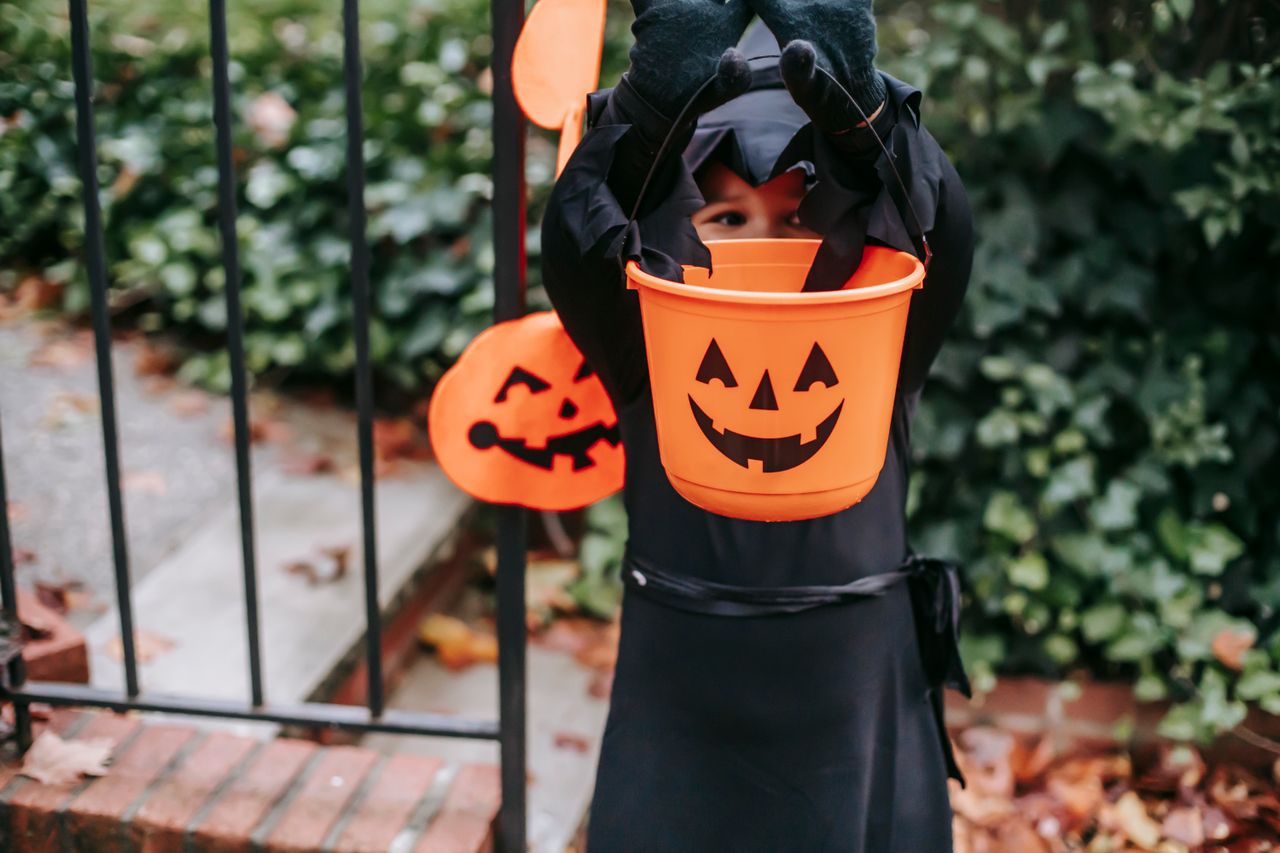
A sensory-friendly Halloween is one planned around a child's sensory needs, so that costumes, noise, lights, crowds, and treats feel manageable instead of overwhelming. Halloween can be the most sensory-intense night of the year for a child with sensory processing differences, and a little preparation from parents and occupational therapists can turn a stressful evening into a successful one.
Halloween falls on a Saturday this year, which gives Treasure Coast families a weekend of festivals, trunk-or-treats, and neighborhood trick-or-treating in Vero Beach, Sebastian, and Fort Pierce. For some children that is pure fun. For others, it is a lot.
Why is Halloween so hard for some children?
Halloween stacks many sensory challenges into a few hours. A costume can itch, bind, or feel too warm in Florida's October heat. A mask limits vision and breathing. Doorbells, spooky sound effects, and flashing decorations arrive without warning. Crowds of excited children bump and jostle. Candy brings strong tastes, sticky hands, and a break from normal meals.
Children differ in how they process these inputs. Some are over-responsive and feel sounds, touch, or lights too intensely. Others are under-responsive or seek extra input, and may run, crash, or chew when the night gets exciting. Both patterns can lead to meltdowns, shutdowns, or avoidance, and neither is a sign of bad behavior.
Sensory differences are more common than many parents realize. In a 2004 study in the American Journal of Occupational Therapy, 13.7 percent of returned parent surveys for kindergarten children met criteria for sensory processing disorders, and even the most conservative estimate was 5.3 percent of the full kindergarten enrollment studied (Ahn et al., American Journal of Occupational Therapy, 2004). In a classroom of 20 children, that is likely at least one child who finds Halloween harder than their classmates do.
How does an occupational therapist look at Halloween?
Occupational therapists study how a child's body and brain take in sensory information and use it to take part in daily activities. For a child, a holiday is an occupation, just like dressing, eating, or going to school. If you want a primer, here is what pediatric occupational therapy covers.
In practice, our occupational therapists ask three questions about a holiday like this one: what is the child likely to find hard, what can we change in advance, and what skills can we build so that next year is easier? The plan balances adjusting the environment with gradually stretching the child's comfort.
What costume tips help children with sensory sensitivities?
Costume choices matter more than most families expect. In our experience with Treasure Coast families, the costume is where many Halloween difficulties begin.
• Choose soft, familiar fabrics. Use the child's favorite pajamas, a soft t-shirt, or leggings as the base layer, and build the costume on top.
• Skip the mask. Face paint can be itchy too, so try a hat, headband, or a costume that does not cover the face.
• Remove tags and seams. Turn items inside out or cut out labels.
• Test-drive the costume. Have your child wear it for short periods in the days before Halloween so it feels familiar.
• Plan for the heat. Layers that can come off prevent overheating, which makes everything harder.
• Let your child choose. A child who picks their own costume is more invested in wearing it.
How can you make trick-or-treating more manageable?
Predictability is the most powerful sensory support. Children handle uncertainty better when they know what is coming.
1. Preview the plan. Use a simple visual schedule or story: costume, walk, three houses, candy, home.
2. Start early and go short. Daylight, fewer crowds, and less noise help. Plan to stop when your child is done.
3. Pick a quieter route. Choose a familiar street or a community event with a calm area.
4. Practice the routine. Rehearse ringing the bell, saying "trick or treat," and saying thank you at home first.
5. Bring sensory tools. Noise-reducing headphones, sunglasses, a fidget, or a chewy snack can all help.
6. Create an exit plan. Agree on a signal that means "I need a break," and honor it.
For children who seek input, build in movement. A wagon to pull, a bucket that is heavy to carry, or a walk that includes hills and stairs can give the body the input it craves in a safe, organized way.
What about candy and the after-party?
A pile of candy can lead to a crash. Help your child set expectations ahead of time: how much to eat tonight, and when to have more. Offer a protein-rich meal or snack before heading out so they are not running on sugar alone, and wash sticky hands as soon as you are home if touch is a challenge. Keep the evening wind-down calm, with dim lights and a familiar bedtime routine.
If your child is a picky eater, candy is not a reason to worry, but novel textures and flavors can be overwhelming. Let them explore at their own pace.
When is it more than a Halloween problem?
If your child struggles every day with clothing, noise, or crowds, Halloween is likely a magnified version of what happens all year. Daily signs to watch for include extreme reactions to tags or seams, covering ears at everyday sounds, difficulty with grooming, or seeking constant crashing and spinning.
An occupational therapy evaluation can identify what is behind these responses and give your family concrete strategies. Learn more about our pediatric occupational therapy program, which supports children across Indian River and St. Lucie Counties through sensory, motor, and daily-living skills.
Frequently asked questions
What does sensory-friendly Halloween mean? It means planning the holiday around a child's sensory needs, with comfortable costumes, a predictable schedule, quieter routes, and a plan for breaks. The goal is for the child to enjoy the night at a level that works for them.
How can I help my child tolerate a costume? Start with soft, familiar clothes as a base, remove tags, and let your child practice wearing the costume before the day. Avoid masks and offer a choice of costume so the child feels in control.
Is it okay if my child skips trick-or-treating? Absolutely. Some children prefer handing out candy at home, a small family gathering, or a daytime event. Success looks different for each child, and a calm, happy Halloween counts.
What if my child has a meltdown during Halloween? Move to a quiet place, lower the demands, and give your child time to settle. A meltdown is a sign of overload, not misbehavior, and having a break plan in advance makes it easier to handle.
When should I ask an occupational therapist about sensory issues? Consider an evaluation if sensory reactions interfere with daily routines such as dressing, eating, sleeping, or school, or if holidays regularly end in distress. A licensed occupational therapist can assess your child and suggest next steps.
Talk with our team about your child's sensory needs
If holidays, school mornings, or everyday routines are harder than they should be, our team can help. Contact Vero Pediatric Therapy Services to talk about an occupational therapy evaluation.
About the authors
Vero Pediatric Therapy Services is a Treasure Coast practice of licensed Occupational Therapists, BCBA-supervised ABA professionals, and licensed Speech-Language Pathologists, plus a structured six-month Parent Coaching program spanning OT, ABA, and Speech tracks. The practice provides private-pay, family-centered, evidence-based pediatric therapy to families across Vero Beach, Sebastian, and Fort Pierce in Indian River and St. Lucie Counties, and is an approved provider for the Family Empowerment Scholarship for Students with Unique Abilities (FES-UA) through Step Up For Students. Contact Vero Pediatric Therapy Services to learn more.