Generalization in ABA therapy is a child's ability to use a skill outside the setting where it was taught, with different people, different materials, and at different times of day. A skill that only appears in the therapy room with one familiar therapist is not a finished skill, and in a well-designed program it was never supposed to stay there.
This is the question we hear most often from families in Vero Beach, Sebastian, and Fort Pierce: "She does it with you, so why won't she do it with me?" Carrying a skill across settings is a separate teaching job. It does not happen automatically, and a good program plans for it from the first week rather than hoping for it at the end.
Why doesn't a new skill transfer on its own?
Children learn in context, and young children learn in very specific context. A three-year-old who has practiced requesting a snack at a small blue table, with one therapist, using one set of picture cards, has learned something real. What they may not have learned is that the same request works at the kitchen counter, with Dad, at 5 p.m., when the answer might be "not yet."
Setting, person, materials, time of day, and the way a request is prompted all change what the moment looks like to the child. Behavior taught under one narrow set of conditions tends to stay under those conditions unless the teaching deliberately widens.
That is why current best practice builds generalization into instruction from the beginning rather than treating it as a final phase. The national review of evidence-based practices for children and youth with autism identified 28 practices with sufficient evidence to be considered evidence based, including naturalistic intervention, which teaches inside everyday routines precisely because those routines are where the skill has to work (National Clearinghouse on Autism Evidence and Practice, 2020). The Centers for Disease Control and Prevention estimates that about 1 in 31 children aged 8 years has been identified with autism spectrum disorder (CDC).
What does planning for generalization actually look like?
It looks like variation, introduced on purpose and early.
1. Multiple people. Practiced with more than one therapist, then parents, then siblings and grandparents.
2. Multiple settings. Therapy room, hallway, waiting area, car, kitchen, backyard, store.
3. Multiple materials. Not one cup, but the cup at home, the cup at school, and a cup the child has never seen.
4. Natural consequences. Asking for the ball results in the ball, not a token exchanged later for something unrelated.
5. Varied prompts. Different phrasings and tones, plus a deliberate plan for fading the prompt out entirely.
6. Real timing. Practicing hand washing before an actual meal rather than at a scheduled 10:15 slot.
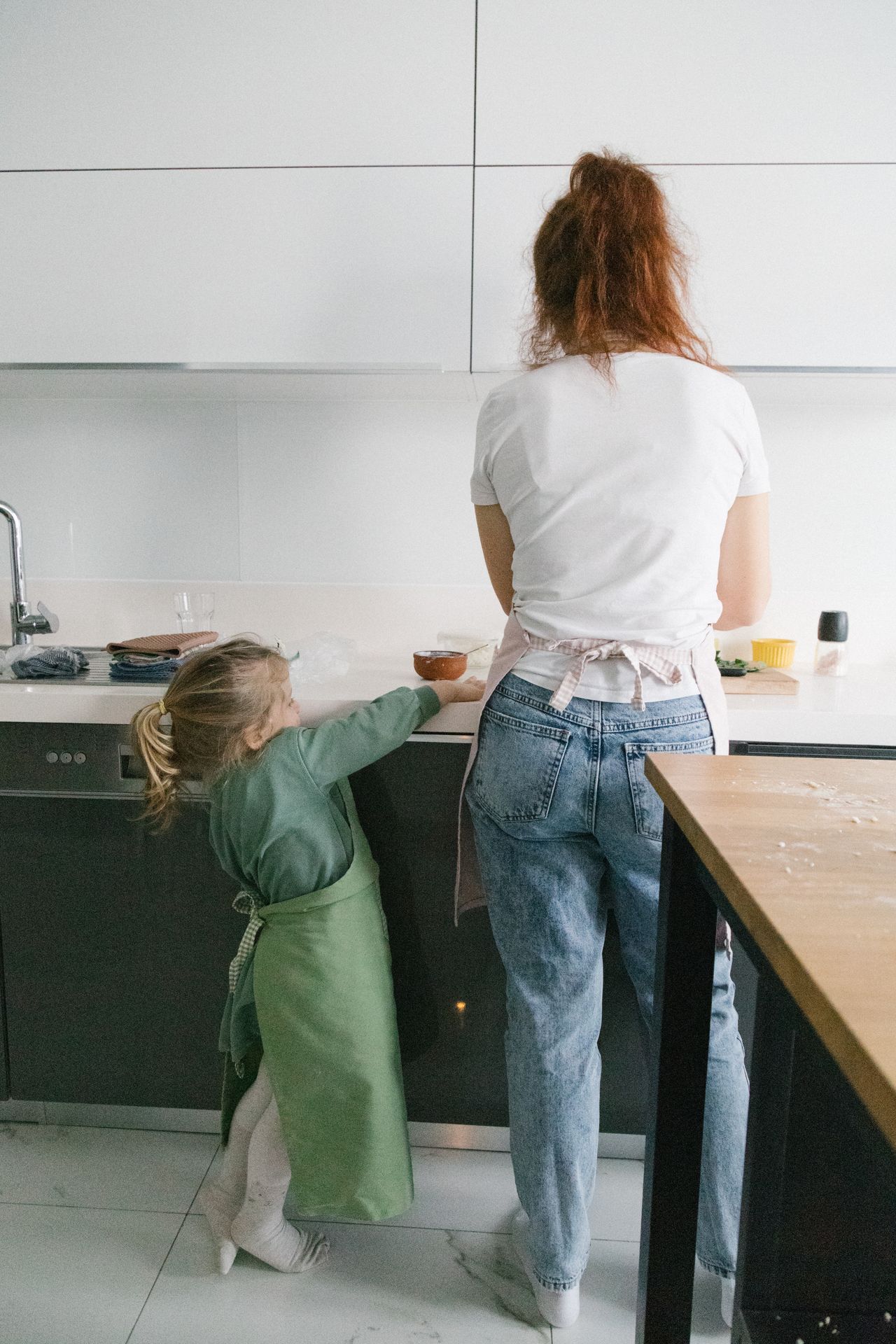
Teaching inside real routines is one reason how today's ABA is delivered through play matters so much. When teaching already happens during snack, dressing, and play, there is less distance to cross between the clinic and the kitchen table.
What is maintenance, and why is it tracked separately?
Generalization is whether a skill shows up in a new place. Maintenance is whether it is still there in three months, after intensive teaching has stopped.
A child can generalize a skill beautifully and still lose it when the program moves on to new targets and nobody circles back. That is why programs track maintenance deliberately, with periodic probes on previously mastered skills rather than an assumption that mastered means permanent. A well-run program can tell you which skills are in acquisition, which are in generalization, which are in maintenance, and when the next probes happen.
What is the family's role in this?
Central, and this is not a polite thing we say. Parents and caregivers are present in the settings where the skill actually has to work, so parent training is not an add-on to generalization, it is the mechanism.
Practical ways families support carryover:
• Use the same words the therapy team uses for the same request
• Honor a request when the child makes it correctly, even at an inconvenient moment
• Practice in small doses inside routines you already have
• Let the child be less than perfect in a new setting; approximations are progress
• Tell the team what is not working at home, because that is data, not a complaint
• Bring the skill to real places: the grocery aisle, the church nursery, the waiting room
That last item is where families often see the biggest jump. A child who can request, wait, and transition at the store has a skill that will survive almost anything.
How does this shape what to look for in an ABA program?
A program that plans for generalization will describe, without being asked, how a skill moves from acquisition to the community. It will include structured parent training, not just an update at pickup, and it will have a BCBA involved in writing and revising those plans rather than only signing off on them.
Families comparing options can look at our BCBA-supervised ABA services on the Treasure Coast to see how supervision, parent training, and naturalistic teaching fit together in one program. Children who also receive occupational therapy often see the two disciplines reinforce each other here, since motor and sensory readiness affects how available a child is to practice in a busy environment.
Frequently asked questions
Why does my child use a skill in therapy but not at home? Young children often learn a skill tied tightly to the setting, person, and materials it was taught with, so a new environment can look like an entirely different situation. Carrying the skill over is a separate teaching step that involves practicing with different people, in different places, and with different materials.
What does generalization mean in ABA therapy? Generalization is the use of a learned skill outside the original teaching situation, including with new people, in new settings, and with new materials. A program plans for it from the start rather than treating it as something that happens on its own at the end.
How is maintenance different from generalization? Generalization is about where and with whom a skill appears, while maintenance is about whether the skill is still present weeks or months after intensive teaching ends. Programs check maintenance with periodic probes on previously mastered skills.
What can parents do at home to help skills carry over? Use the same language the therapy team uses, respond to the skill when the child uses it, and practice inside routines that already exist, such as meals, dressing, and leaving the house. Short and frequent works better than long and occasional.
Should community outings be part of an ABA program? For many children, yes. Stores, waiting rooms, playgrounds, and places of worship are the real settings where skills are needed, and structured practice there is often what turns a therapy-room skill into a life skill.
Ready to talk about your child's program?
If your family is seeing progress in the therapy room that has not reached the kitchen table yet, that gap is addressable, and it is usually a plan problem rather than a child problem. Vero Pediatric Therapy Services provides BCBA-supervised ABA therapy and parent training for families across Indian River and St. Lucie Counties. Contact us to talk about what your child is working on.
About the authors
Vero Pediatric Therapy Services is a private-pay pediatric therapy practice staffed by licensed Occupational Therapists and BCBA-supervised ABA professionals, serving families in Vero Beach, Sebastian, and Fort Pierce across Indian River and St. Lucie Counties on Florida's Treasure Coast. Our clinical team delivers family-centered, evidence-based care built around each child's daily routines and each family's goals. To ask a question or request an evaluation, contact our team.